
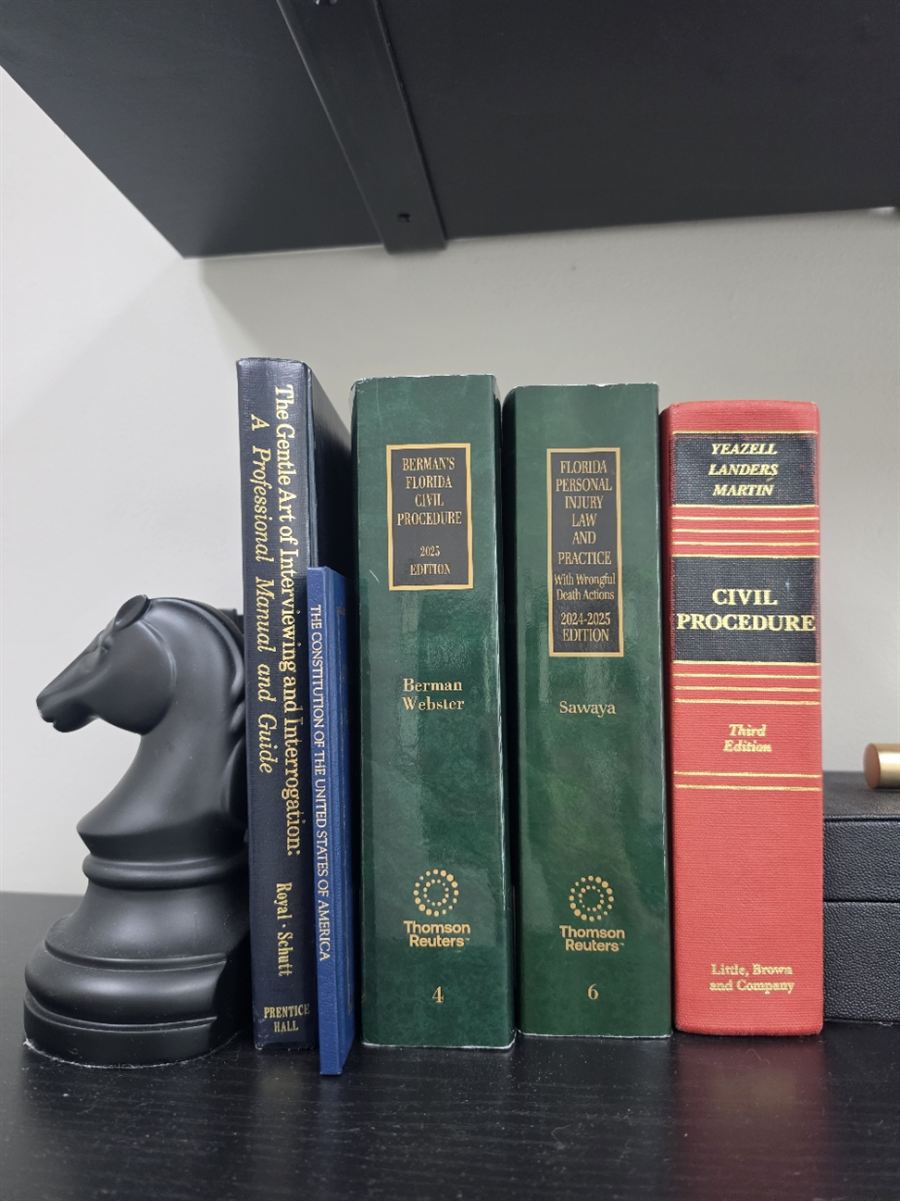
If the driver who hit you has no insurance for your injuries, you are not out of options. In Florida, your own PIP still pays first, and the at-fault driver is only one of several places the money can come from: the owner of the car, the driver’s employer, and uninsured motorist (UM) coverage that may be on your policy, a relative’s policy, or the car you were in. Finding those takes more than reading the police report, and that digging is where a lot of my work on these cases happens.
Why do so many Florida drivers have no insurance for my injuries?
Because Florida lets them. Most Florida drivers are only required to carry $10,000 in personal injury protection (PIP) and $10,000 in property damage liability. Florida does not require bodily injury liability coverage, the insurance that pays for injuries a driver causes to someone else, and it is one of the only states that does not.
I think that is a dumb law, and I will say so plainly. It means a driver can legally run a red light on Back Beach Road, put you in surgery, and carry nothing that pays for it. Their PIP covers them, not you. I wrote more about that gap in why reviewing your own insurance policy can protect you.
Your first stop is your own PIP, which pays no matter who caused the crash, as long as you get medical care within 14 days. Here is what PIP covers and where it runs out. Everything below is about what comes after PIP.
Can the owner of the car be responsible if the driver had no insurance?
Yes. Under Florida’s dangerous instrumentality doctrine, the owner of a car is generally responsible when someone they let drive it causes a crash. The Florida Supreme Court adopted that rule more than a century ago, on the idea that a car is dangerous enough that whoever puts it on the road answers for how it gets used.
The driver and the owner are different people more often than you would think: a son in his mother’s car, a friend borrowing a truck for the weekend, a boyfriend driving his girlfriend’s car. The driver may have nothing while the owner’s policy covers the car. That is why two of my first questions in any of these cases are who owned the car and whose policy was on it.
There are limits. Florida caps what an individual owner who lent the car can owe in some situations under section 324.021, and federal law largely shields rental and leasing companies. Those rules affect how much is available. They do not take the owner out of the picture.
Can the other driver’s employer be responsible?
Yes, if the driver was working. When an employee causes a crash while doing their job, the employer is generally responsible too, and businesses usually carry commercial auto coverage with far higher limits than a personal policy. That can hold even when the employee was driving their own car on a work errand, if the business carried coverage for that.
Around Panama City Beach, a lot of daytime traffic on Highway 98 and Back Beach Road is somebody’s work vehicle: contractors, delivery drivers, service trucks. The crash report usually does not say whether the driver was on the clock. You have to ask, and sometimes dig: where were they headed, whose truck was it, what was on the door. I have had cases where the at-fault driver turned out to be working, and the employer is where the money came from.
Will my own uninsured motorist coverage pay?
If you have it, yes. UM pays what the at-fault driver’s coverage should have: medical bills beyond PIP, lost wages, and pain and suffering. It also applies when the driver has some coverage but not enough for your injuries.
Under Florida Statutes section 627.727, insurers have to offer UM with bodily injury coverage, and rejecting it has to be done in writing. A rejection that does not hold up can put the coverage back in play, and I have won claims on exactly that, which I explain in my hit and run post.
UM generally follows you, not just your car. It can cover you as a passenger, a pedestrian, or a cyclist. Pull out your declarations page and look for the uninsured motorist line before you assume you have nothing, and if you insure more than one car, check whether your UM is stacked.
What if I was a passenger in someone else’s car?
The UM on that car can cover you, even though you have never seen the policy. If the driver who hit you had nothing, the car you were riding in may carry UM that protects everyone inside it, and your own UM can sometimes sit on top of that.
The same goes for the owner’s policy when the owner was not driving. If a friend was driving their parent’s car and you were in the passenger seat, the parent’s policy is worth a look.
Does a relative’s policy cover me?
It can. UM on the policy of a relative who lives in your household commonly covers you too, even if you do not own a car. A college student living away from home can still count as part of the parents’ household. I told two of those stories in the hit and run post.
Why do some law firms turn these cases down?
Because they stop asking questions too early. I have taken at least a few cases that other personal injury firms had already declined, and in each one the difference was not a clever legal theory. It was a more thorough investigation for coverage.
In one, the client had no coverage of their own and the at-fault driver had none either, so the case looked dead. I asked who the client lived with, and the answer led to a policy that covered them. In another, the at-fault driver looked uninsured, but when I dug into where the driver was going, it turned out they were working at the time of the crash, which brought the employer into the case.
Most firms ask two questions: do you have UM, and did the other driver have insurance? If both answers are no, the file closes. The follow-up questions take ten minutes:
- Who do you live with?
- Who owned the car that hit you?
- Was the other driver working?
- Whose car were you riding in?
Can the police report be wrong about the other driver’s insurance?
Yes. A police report lists whatever insurance the driver showed at the scene, and sometimes that is an old card. I have hired insurance search companies that found coverage the at-fault driver did have, in a case where the police report listed an expired policy. I did the same thing when a car hit a cyclist and drove off, and the search found a policy nobody knew existed.
Sometimes a thorough search still comes up empty, and if it does, I will tell you that on the first call.
Key takeaways
- Florida does not require bodily injury coverage, so uninsured drivers are common here.
- Your own PIP pays first, if you get care within 14 days.
- The car’s owner and the driver’s employer can both be responsible, and each may have insurance.
- UM can come from your policy, a relative’s, or the car you were in.
- Do not trust the police report’s insurance line as the final answer.
If you were hit by a driver with no insurance, call me, Phillip Stamman, at my Panama City Beach office: (850) 842-5449, or contact me here for a free consultation. I will look for every policy before anyone tells you there is nothing. You can also read more about how I handle car accident cases in Panama City Beach.
This post is general information about Florida law, not legal advice, and reading it does not create an attorney-client relationship. Every case turns on its own facts. Talk to a lawyer about yours before you rely on anything here.
Stay safe out there,
Phillip Stamman
Solo Personal Injury Lawyer
Panama City Beach, Florida