
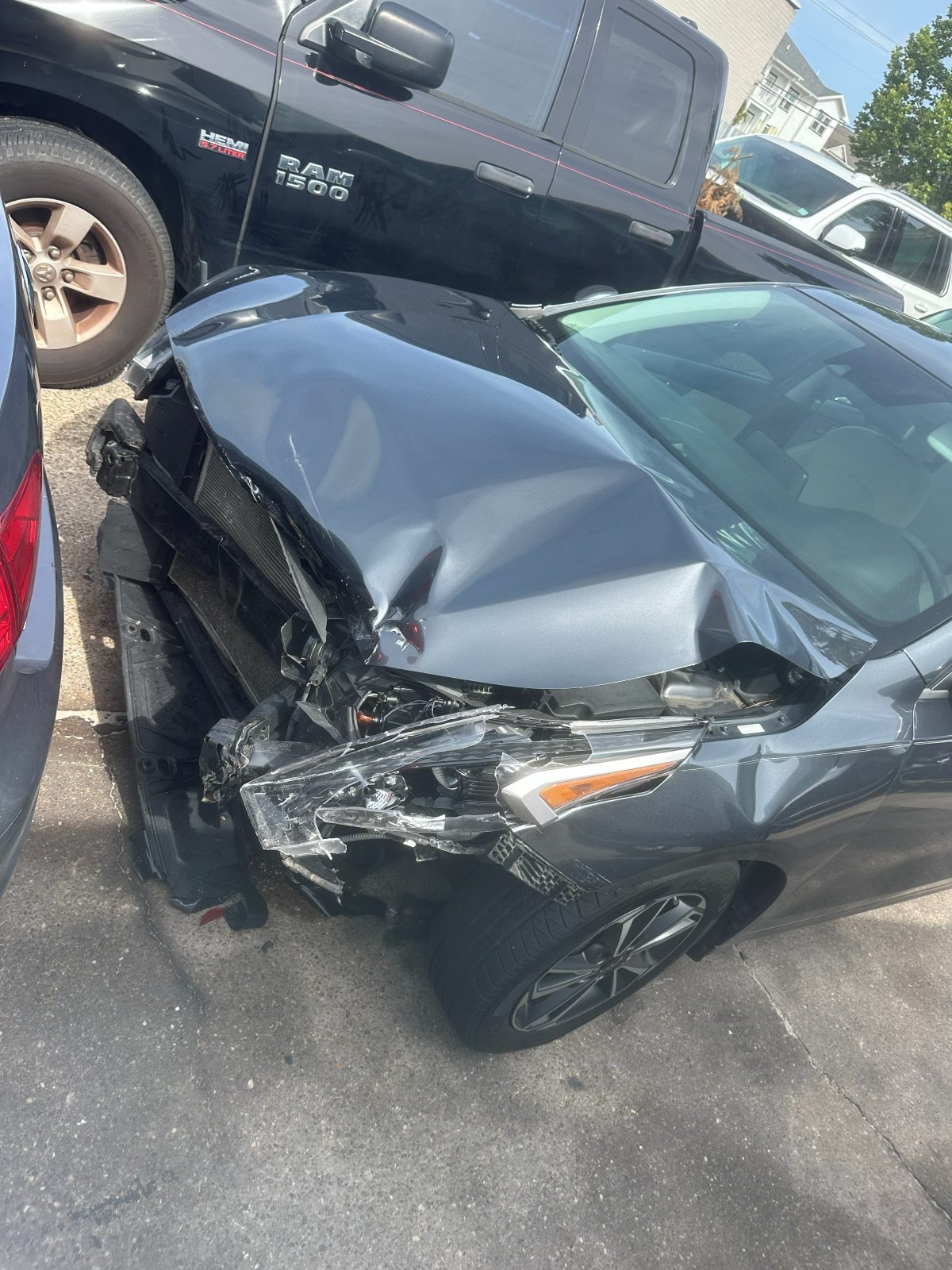
If a car hit you while you were riding a bike in Florida, you have an auto injury claim, even though you were never in a car. The same no-fault PIP system that covers drivers covers you, and the at-fault driver’s insurance owes you for the rest, just as it would after a car wreck.
What is different is where the money comes from. Cyclists are more likely to be badly hurt, more likely to have no auto insurance, and more likely to be left in the road by a driver who keeps going. Each of those makes it worth having a lawyer trace the coverage before you believe anyone who tells you there is none.
Does it count as a car accident if I was on a bike?
Yes. What matters is that a motor vehicle hit you, not what you were riding. Florida law treats a bicycle as a vehicle with the right to use the road, so the usual rules follow you: PIP, the 14-day deadline for your first treatment, and a claim against the driver who caused it. Here is what to do in the first two weeks after a Florida wreck, and nearly all of it applies to you.
Whose PIP pays when a car hits a cyclist?
This is the first thing I investigate in every bike case. If you own a car and insure it, your own PIP pays first, even though the other driver caused the crash. Here is what PIP covers and what it does not.
No auto insurance? Plenty of people ride precisely because they have no car, and that does not always mean no PIP. Depending on the facts, it can come from:
- A relative you live with. PIP on a household member’s policy commonly covers resident relatives, including when they are hit on a bike.
- The car that hit you. This is one of the rare situations where the at-fault vehicle’s PIP steps in for someone who was never in it. Under Florida Statutes section 627.736, the PIP on the striking vehicle can cover a Florida resident it physically hit who was not in another motor vehicle.
That second option has conditions. You generally have to be a Florida resident, the car has to have actually made contact with you, and you cannot be entitled to PIP from somewhere else, such as a relative’s policy. The one that catches people: if you own a car that Florida requires you to insure and you let the insurance lapse, you generally cannot use the other driver’s PIP. “I don’t have insurance” and “I don’t have a car” are not the same answer, and the difference can decide whether PIP pays at all.
Who pays for the rest?
PIP tops out at $10,000 on a standard policy, and a cyclist with a broken bone can use that up fast. For everything beyond it, including pain and suffering, I work through the other policies in order:
- The owner’s bodily injury coverage. Florida generally holds a car’s owner responsible when someone they let drive it causes a crash, so the policy on the car that hit you is the first place I look.
- The driver’s own bodily injury coverage. If the driver did not own the car, they may carry their own policy, and it can apply on top of the owner’s. Florida does not require most drivers to carry bodily injury coverage at all, which is why I check both.
- Your own uninsured motorist coverage. If the at-fault driver has no bodily injury coverage, not enough to cover your injuries, or was never identified, your UM steps in. It generally follows you, not your car, so it covers you on a bike, and it can also come through a relative you live with. Pull out your own declarations page before you assume you have nothing.
The bike itself and any destroyed gear are a separate claim against the driver’s property damage coverage.
Why do so many drivers leave the scene after hitting a cyclist?
Because the drivers with the most reason to run (impaired, unlicensed, or uninsured) know a cyclist cannot follow them.
Around here, the corridors I worry about are Highway 98 (Back Beach Road) and Front Beach Road, where fast traffic shares the edge of the road with people riding to and from work, often in the dark. And in Walton County, 30A packs rental bikes and visiting drivers who do not know the road onto the same strip of pavement. Florida law requires drivers to give a cyclist at least three feet when passing, under section 316.083, but plenty do not.
If the driver fled, the steps are the same as in any hit and run in Florida. The two that matter most: call 911 so a report gets written that night, and hunt for camera footage immediately, because most systems record over themselves within days.
Can a hit and run driver still be found if the police stop looking?
Sometimes. One of my cases shows how.
A client of mine was riding his bike in Panama City at about two in the morning when a driver, likely drunk, hit him, broke his leg, and sped off. My client had no insurance of any kind, and he was out of work. Other firms had already turned his case down: an unknown driver, no PIP, no UM, no health insurance.
So I built the case myself, the way I learned to as a former prosecutor at the State Attorney’s Office in Bay County, where police files were my daily work. I sent public records requests for everything the Panama City Police Department had: the crash report, the investigation reports, the CAD (dispatch) notes, the body camera footage, and the evidence. I stayed in contact with the officers working the case, and they found surveillance video from a nearby business that showed the vehicle’s license plate. (In other cases, I have tracked down footage myself and submitted it to police.)
Police reached out to the registered owner, who never responded, and no charges were ever filed. The criminal side stopped there.
My client’s claim did not. I took the plate information to an insurance search service, which can often trace a vehicle to its insurance policy, especially with the large carriers, and it turned up a possible policy written out of state. I made the claim against that policy and recovered the full policy limits.
For a man with no job, no insurance, and a broken leg, that money was a financial safety net while he healed. The lesson is that “the police never charged anybody” and “nobody will pay” are two different statements.
Will the insurance company blame me for being on the road?
They will try, with questions about where you were riding and whether you were visible. Florida reduces your recovery by your share of the fault, and if you are found more than half at fault, you generally recover nothing. Lock down the report, the video, and the witnesses early.
Key takeaways
- A car hitting you on a bike is an auto injury claim. PIP, the 14-day treatment deadline, and a claim against the at-fault driver all apply.
- Your own PIP pays first. If you have no auto policy, PIP can sometimes come from a relative you live with, or even from the car that hit you.
- Owning an uninsured car can shut that door. The other driver’s PIP generally does not cover someone who owns a vehicle Florida requires them to insure.
- Beyond PIP, check every policy. The owner’s bodily injury coverage, the driver’s own, and your own uninsured motorist coverage, which follows you onto your bike.
- A hit and run is not the end of the case. In one of my cases, nearby surveillance video and an insurance search turned a driver police never charged into a full policy limits recovery for a client with no insurance at all.
If a car hit you while you were riding, I will look at the police file and every policy that might apply, at no charge, and there is no fee unless we recover for you. Call me, Phillip Stamman, at my Panama City Beach office: (850) 842-5449, or contact me here for a free consultation. You can also read more about how I handle car accident cases in Panama City Beach.
This post is general information about Florida law, not legal advice, and reading it does not create an attorney-client relationship. Whether any particular policy covers you depends on its exact language and on facts specific to your situation. The case described here depends on the facts of that case, and past results do not guarantee a similar outcome in any other case. Every crash is different; talk to a lawyer about yours.
Stay safe out there,
Phillip Stamman
Solo Personal Injury Lawyer
Panama City Beach, Florida