
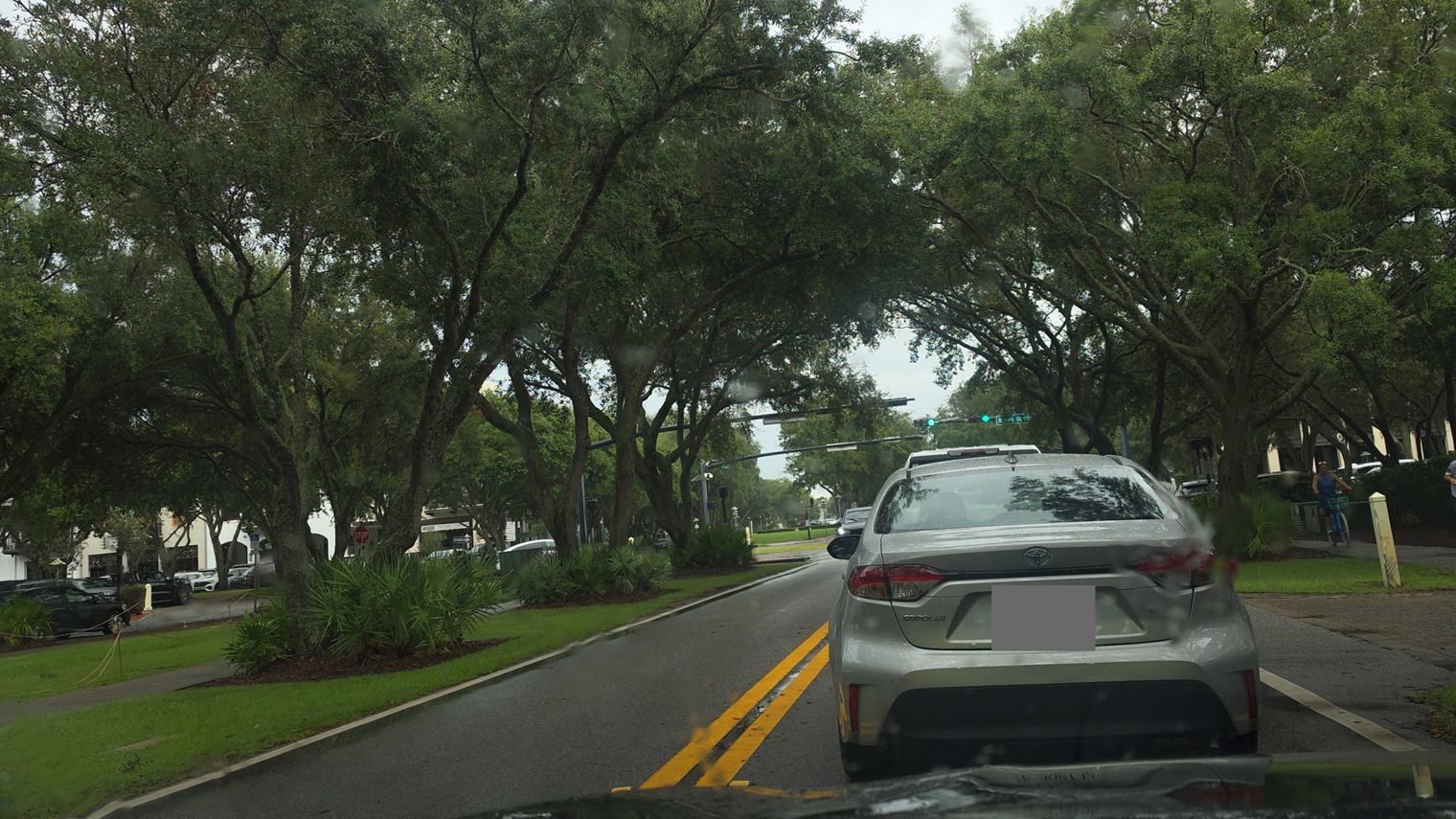
If you were hurt in a wreck in Florida, see a medical provider within 14 days, and that can include a licensed chiropractor. Florida law cuts off your own PIP medical coverage if your first visit comes later than that, and that deadline does not care how busy your week was.
After that, the choice of provider matters more than most people expect. Any licensed chiropractor in Florida can treat you. Far fewer of them regularly handle auto injuries, and that difference shows up in two places most injured people never think to ask about: how the clinic bills, and how the clinic writes things down.
How does PIP pay for chiropractic care?
Florida is a no-fault state, which means your own Personal Injury Protection benefits pay for your early medical treatment regardless of who caused the crash. Under Florida Statutes section 627.736, PIP covers 80 percent of reasonable expenses for medically necessary care, and only if your initial services and care are rendered within 14 days of the crash.
Chiropractic care is covered. Two details about it are worth knowing before you pick a clinic:
- A chiropractor cannot open up the full $10,000. Florida gives you the full PIP medical benefit only when a qualified provider determines you had an emergency medical condition, and the statute limits that determination to a medical doctor, an osteopathic physician, a dentist, a physician assistant, or an advanced practice registered nurse. A chiropractor is not on that list. Without that determination, your PIP medical benefit is commonly limited to $2,500. A clinic that handles auto injuries every week knows this and coordinates with a medical provider. A clinic that mostly does wellness care may never mention it. That determination usually comes from a hospital or urgent care clinic, which is part of the decision about whether to go to the ER after a wreck.
- Massage and acupuncture are not covered at all. The statute excludes them from PIP medical benefits no matter who provides them.
That is the entire PIP discussion this post needs. If you want the full picture, including lost wages, the death benefit, and why timely billing decides whether any of it gets paid, see what PIP insurance covers in Florida. The deadline and the coverage are the easy part. The hard part comes later.
How can I tell whether a chiropractor actually handles auto injuries?
You can do most of this from your phone in about ten minutes, before you ever call.
Search for chiropractors near you and open their websites. Then look for signals that auto injuries are a real part of the practice rather than a line item:
- Do they talk about car accident injuries at all? A practice that treats crash victims regularly says so, usually on the front page.
- Do they emphasize it? There is a difference between a list of twenty conditions with “auto injury” buried in the middle, and a page that explains whiplash, the 14-day deadline, and how they work with PIP.
- Do they mention PIP or insurance billing by name? Clinics that bill PIP routinely tend to say so plainly, because it is what their patients are searching for.
- What do the reviews say? Read past the star rating and look for reviews from people who were in wrecks. Consistent, specific, recent reviews are a better signal than a perfect average.
None of that guarantees anything. It is just a filter, and it is a good one. A clinic built around auto injuries has done this hundreds of times, and you are doing it once.
I am not going to name a chiropractor for you, and you should be a little skeptical of any lawyer who does. Your treatment is your decision and your relationship with your provider. What I can tell you is what separates the records that help from the records that do not.
Does it matter how a chiropractor writes things down?
This is the part almost nobody thinks about, and it is the part that decides what your claim is worth.
I have had clients decide to go with a chiropractor of their own choosing, which is entirely their right. Sometimes it works out fine. Other times I request the records and receive unreadable chicken scratch attached to a large bill, and it does very little to help me settle the case successfully.
Here is why that matters, in plain terms. Florida does not let you recover money for pain and suffering in a car case just because you were hurt and someone else was at fault. Under Florida Statutes section 627.737, you have to clear a threshold: a significant and permanent loss of an important bodily function, a permanent injury within a reasonable degree of medical probability, significant and permanent scarring or disfigurement, or death.
Read that again and notice what it turns on. Permanent. That is a medical opinion, and it either exists in your chart or it does not. Nobody can add it later because the case needs it. For what it takes to confirm one, see am I entitled to pain and suffering damages in Florida.
So a provider who treats auto injuries regularly is documenting for a purpose: what they measured, how it changed over time, whether it is connected to the crash, and whether anything about it is permanent. A provider who is documenting for their own treatment purposes is writing notes to themselves, and those notes may be perfectly good medicine and still prove nothing to an adjuster who has never met you.
To be fair about it, this is not a knock on holistic or wellness-focused practitioners. Many of them are skilled, they genuinely care about their patients, and their patients genuinely feel better. That is a real service. It is just a different job than building a medical record that has to survive an insurance company reading it in the least generous way possible. Feeling better and proving an injury are two separate things, and only one of them is written down.
Should I use a chiropractor who takes my health insurance too?
Ask about it up front. PIP pays 80 percent of reasonable expenses, and your PIP limit is a finite pot of money that a course of treatment can use up faster than you would think.
A clinic that accepts your health insurance as secondary coverage can help absorb what PIP does not, which keeps your costs down and keeps your treatment going as long as your provider recommends. Clinics that do this routinely will tell you so on the phone. It is a fair question to ask before the first visit, and how a front desk answers it tells you something about how often they do this.
Why does the drive to the clinic matter?
Because you have to actually go, usually several times a week, for weeks.
This sounds like the least important factor on the list and in my experience it is one of the most. Life is busy, work does not stop because you were rear-ended, and a clinic that sounded convenient in the parking lot after the crash starts to feel very far away by week three. Around here that is not hypothetical: getting across the Hathaway Bridge or the inlet bridge during spring break, or in the middle of a summer afternoon, can turn a twenty minute appointment into most of an afternoon. Clients from the 30A side of Walton County have the same problem pointed the other direction.
What happens next is predictable. Appointments get pushed, then missed, then the treatment stops before the provider said it should. That gap goes in the record, and gaps in treatment are one of the first things an adjuster looks for. The argument is not subtle: if you were really hurt, why did you stop going?
Pick something close to your home or your work. Boring advice, and it protects your case more than almost anything else you can control.
Key takeaways
- Get evaluated within 14 days. Florida’s PIP statute cuts off your medical coverage if your initial care comes later, and the clock runs from the date of the crash, not from the day you started hurting.
- Chiropractic care is covered by PIP, but a chiropractor cannot make the emergency medical condition determination that opens up the full $10,000. Without it, expect the medical benefit to be limited to $2,500.
- Vet the clinic before you call. Search them, read their site, and see whether auto injuries are something they emphasize or something they mention. Read the reviews for people who were in wrecks.
- Ask whether they take your health insurance as secondary. It keeps your out-of-pocket costs down and stretches your PIP further.
- Choose somewhere close to home or work. Missed appointments turn into gaps in treatment, and gaps get used against injured people constantly.
- Documentation is the whole ballgame. Florida requires a permanent injury before you can recover for pain and suffering, and that opinion has to be in your records.
For the neck and lower back injuries that make up most auto wrecks, the ones that are not life threatening but do not fully go away either, choosing the right chiropractor is one of the most important decisions you will make about your case. It is also one of the few parts of this process that is entirely in your hands.
If you were hurt in a crash and you were not at fault, I will talk it through with you at no charge, and there is no fee unless we recover for you. You can reach me, Phillip Stamman, at my Panama City Beach office: call (850) 842-5449 or contact me here for a free consultation. It costs you nothing to ask a question about your treatment before you are weeks into it. If you want to know how attorney fees work first, here is a plain-English breakdown of what car accident lawyers actually charge in Florida, and you can read more about how I handle car accident cases in Panama City Beach.
This post is general information about Florida law, not legal advice, and reading it does not create an attorney-client relationship. It is not medical advice either, and nothing here is a recommendation of any particular provider. Every crash is different; talk to a lawyer about your specific situation.
Stay safe out there,
Phillip Stamman
Solo Personal Injury Lawyer
Panama City Beach, Florida